
 By Ivory A

I used to think romantic breakups were the worst pain imaginable. But we all had this experience when one of our best friends stopped answering our calls. That sudden silence felt like a physical blow. When a romantic relationship ends, people offer comfort and check on you. When a long-time friend walks away, society expects you to move on quickly. That difference makes no sense. Losing a close friend cuts deep because we rarely prepare for that loss. Research in the PMC Repository shows that close friends act as emotional anchors. Losing them seriously threatens your mental well-being.
The Shock of Losing a Best Friend
Losing a close friend creates a major shock. You build a routine around this person over months or years. Suddenly, that connection goes completely cold.
The biggest issue is the lack of support for friend loss. When you break up with a partner, clear social rules exist. Your family asks how you are doing. Books offer step-by-step advice for a broken heart. Friendships do not get that same support. Society treats friend loss like a minor issue rather than a real tragedy. You suffer in silence because you feel bad crying over a friend.
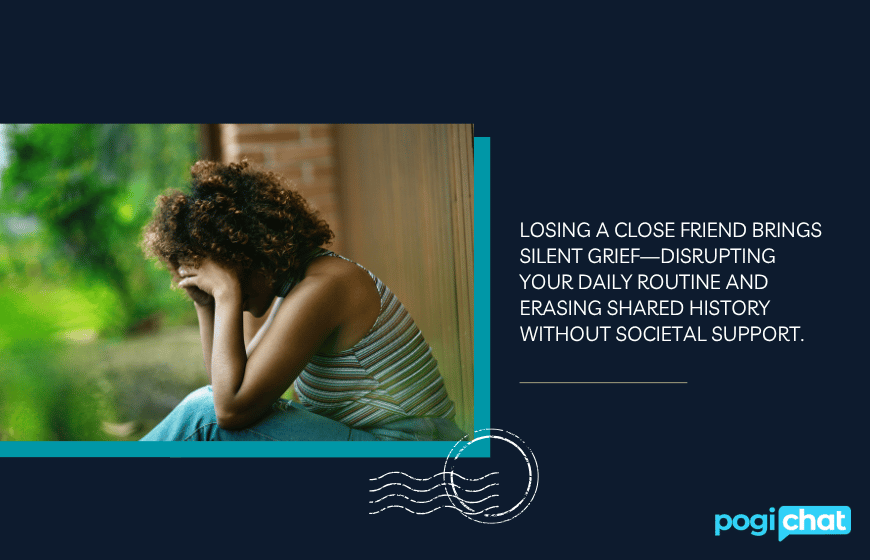
A broken friendship also resets your personal story. This person knew your old jokes, awkward phases, and family drama. A paper from the American Psychological Association shows how strong social bonds help stabilize your identity over time. Losing that bond rewrites your past. You mourn the person, but you also mourn your shared history.
Why the Pain Runs So Deep
We expect our close friendships to last forever. You know romantic partners might come and go. People date, test compatibility, and break up every day. Friendships feel different. We assume true friends will stay in our lives permanently. Breaking that assumption destroys your sense of safety.
Close friends act as emotional mirrors. They support your choices and reflect your personality back to you. When that bond breaks, it leaves a scary void. You start doubting your own judgment. You ask yourself if you were toxic the whole time.
Your brain relies on daily habits. Think about quick texts, inside jokes, and daily check-ins. Removing those familiar routines triggers real mental stress. Studies on PubMed show that social rejection triggers the same brain pathways as physical pain. Your body feels that sudden silence as an actual injury.
RECOMMENDED READING:
Why Making Friends Online Feels Like a One-Sided Interview
Why “Let’s Be Friends” Online Ends in Silence (The Psychology Trick)
Why People Ghost: The 4 Hidden Psychological Triggers Behind Sudden Silence
Why Friendships Slowly Fade or End
Friendships rarely end without a reason, even if it feels sudden. Life changes quietly pull people apart over time. You change careers, find new priorities, or set new boundaries. You grow apart without realizing it. Eventually, one small argument causes a final break.
Unspoken resentment is another major cause. Romantic partners must talk through issues because they share space or plan the future. Friends often do the opposite. They stay silent to avoid conflict. They let small issues pile up over time. That quiet buildup creates a distance you cannot fix.
One-sided effort also destroys connections. One person quietly checks out while the other stays fully committed. The final breakup feels sudden and unfair to the person left behind.
How to Heal and Move Forward
You must accept your emotional pain first. Mourning a friend is real grief. Do not let others minimize your feelings or rush your healing process.
Avoid filling the empty space right away. Rushing into new friendships out of loneliness leads to social burnout. You need time to process what happened. Reflect on your personal boundaries so you know what you want in future friendships.
Reframing the loss protects your future relationships. A broken connection does not mean the entire friendship was a lie. You can treasure good memories and personal growth from that chapter. Do not let a painful ending stop you from trusting new people.

Chat with strangers
from around the world
Random, anonymous, and instant — no sign-up required. Just click and start talking.
Frequently Asked Questions
Why does losing a friend feel worse than a romantic breakup?
Friendships carry an expectation of permanence and lack formal breakup rituals. When a close friend leaves, the loss shatters your expectation of lifelong support without providing clear social support for your grief.
How do I heal from a friendship that ended without closure?
Accept that silence is a form of closure. Focus on validating your own feelings instead of waiting for an explanation, and direct your energy toward healthy habits and supportive people who show up for you.
Is it normal to grieve for a friend who is still alive?
Yes, mourning a friend who is still alive is a recognized form of grief. You are processing the loss of shared routines, personal trust, and a meaningful emotional connection.
How can I tell if a friendship is drifting apart naturally?
You will notice one-sided effort, longer delays in communication, and a lack of emotional depth during catch-ups. Conversations often feel forced or stuck on past memories rather than present experiences.
Should I reach out to an old friend after a sudden fallout?
Reaching out makes sense if you want to offer an apology or seek mutual understanding. Keep your message brief and low-pressure, but respect their space if they choose not to reply.