
 By Keven Galolo

Look around at your next family gathering or local event. The meal is served, but as people find their spots, a distinct pattern forms: the women are gathered around one side of the room, while the men cluster together on the other.
You glance around. On one side, women gather, chatting quietly. Men sit together on the other, sometimes with the kids weaving between both. For many expats, this moment is surprising. For locals, it’s normal. But why do women sit separate at these events? And what does it really say about cultural norms in the Philippines?
Let’s pull up a chair and see what’s really going on.
Why Do Women Sit Separate? The Historical Roots
The idea of seating men and women apart isn’t unique to the Philippines. But the way it shows up here is shaped by deep layers of history.
Back in pre-colonial days, Filipino society already had clear (sometimes fluid) gender roles. Spanish colonization then brought Catholic values and stricter social divisions. In those days, even in church, women sat on one side, men on the other. Over centuries, this became the norm for all sorts of gatherings—from weddings to wakes.
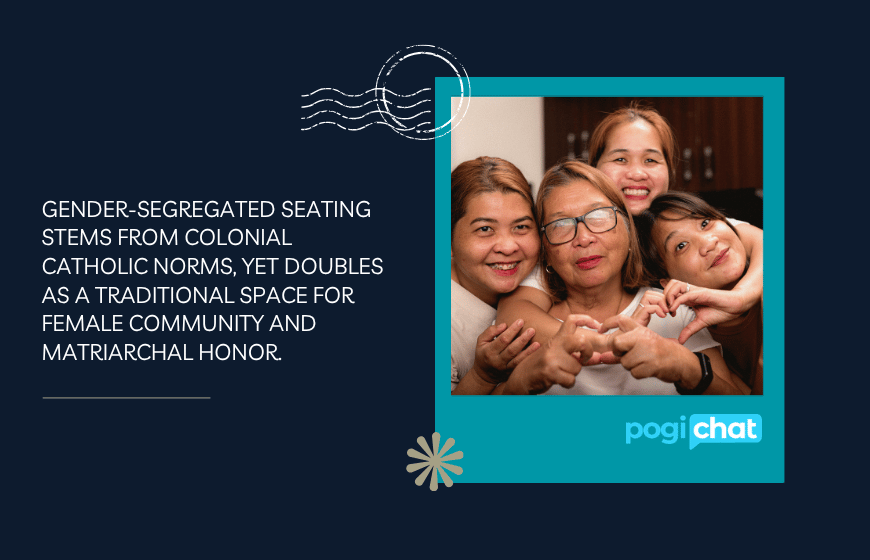
But here’s the twist: sometimes, this separation was about respect, not exclusion. Elders, especially matriarchs, often got the best seats. The act of having the women sit together could be about honoring them, making sure they’re comfortable, and letting them catch up on family news.
It’s easy to see this as old-fashioned. But for many communities, it’s a sign of tradition and togetherness—a way to keep the old stories alive while the lechon crisps on the spit.
Not All Provinces Are the Same
Step outside Manila, and you’ll see that social customs in the Philippines are anything but uniform.
In Ilocos, you might find the old seating patterns still going strong. At a barangay gathering, men might cluster under a tree, swapping jokes, while women sit at a shaded table, sharing stories or keeping an eye on the children. But take a flight south to Cebu, and you’ll find things a bit looser—mixed seating, laughter, and a blend of generations and genders at every table.
Even within provinces, things can change. Some families stick to tradition, while others mix it up, especially if younger folks have worked abroad or studied in the city.
Expat experiences in the Philippines often reflect this variety. “My first fiesta in Batangas—I thought I’d walked into a wedding rehearsal,” recalls Ben, a teacher from Canada and a Reddit user. “All the women were inside, prepping food and chatting. The men? Outside with the grill and the beer. But in Manila, everyone just grabs whatever seat is free.”
It’s a reminder: there’s no single “Filipino way.” There are thousands of islands, and just as many variations on a theme.
What These Seating Arrangements Say About Gender Roles
Here’s something every expat wonders: is this about power, or just habit?
Gender roles in Filipino society have always been complex. On paper, the Philippines looks progressive—women lead companies, run for office, and steer families. But on the ground, everyday customs can still feel traditional.
When women sit separate, it’s often linked to the idea of “delicadeza”—a kind of social grace and propriety. Some say it’s about keeping conversations comfortable. Others see it as a way of maintaining order, especially during big events.
But let’s be honest: sometimes, these seating arrangements in the Philippines do reflect old ideas. The men talk business. The women talk family. Lines blur when the karaoke starts, but the initial separation is real.
At the same time, many Filipinos—especially the young—are challenging these customs. “My lola still insists women sit together at Christmas dinner,” says Mia, a college student from Quezon City. “But my cousins and I ignore her and squeeze in wherever there’s space. She pretends not to notice.”

Chat with strangers
from around the world
Random, anonymous, and instant — no sign-up required. Just click and start talking.
Tradition vs. Change
Cultural norms in the Philippines aren’t set in stone. In cities, many families now seat everyone together, mixing genders and ages. Schools and companies encourage teamwork, not division. Social media exposes everyone to global practices, and change happens quietly—one party at a time.
But tradition holds strong in the province. There, old customs aren’t just about gender. They’re about respect for elders, keeping the peace, and honoring the past.
Younger Filipinos, though, are finding their voice. At many gatherings, you’ll see women leading games, grabbing the mic, or running the show from any seat they like. And men? Sometimes they’re in the kitchen, helping with the dishes.
The net result? A slow but steady move toward gender equality in the Philippines, lived out in small, everyday choices.
Stories from the Ground: Expats and Locals Reflect
You don’t really get it until you’ve been there.
Sarah, an expat from Australia, shares: “At my first fiesta, I was ushered to the ‘women’s table.’ At first, I thought it was weird—like being put in a corner. But within minutes, I was laughing, learning to eat with my hands, and swapping stories. It became the best part of the night.”
On the flip side, Mark, a Filipino-American, found himself between worlds. “My family in Pampanga follows all the traditional practices in the province. But back in the States, we never separated by gender. It took me a while to understand both sides.”
These stories show the heart of Filipino hospitality: a little bit of structure, a lot of warmth, and always room for one more at the table—even if you’re not quite sure where to sit.
RECOMMENDED READING:
Why Foreigners Move to the Philippines: The Top Reasons Expats Are Leaving the West Behind
How to Make a Filipina Fall for You — Not Your Money
These Are the Types of Foreigners Filipinas Really Love
How Does This Compare Globally?
Here’s a surprise: the Philippines isn’t alone.
In India, men and women often sit apart at weddings. In some Middle Eastern countries, gendered spaces are the norm. Even in rural Europe, older folks remember times when men and women ate separately.
The difference? In the Philippines, these customs are changing—sometimes slowly, sometimes all at once. The blend of Spanish, American, and indigenous influences means no two families do things exactly alike.
So, if you’re new here, don’t stress if you’re asked to join a certain table. It’s not about exclusion. It’s about sharing food, stories, and a little bit of history.
Where You Sit Is Just the Beginning
If you’ve noticed that they make the women sit somewhere else, congratulations—you’ve spotted a living tradition. But don’t let the seating chart fool you. Cultural norms in the Philippines are layered, flexible, and always evolving.
Whether you’re an expat in Manila or a visitor in the province, bring curiosity, not judgment. Ask questions. Listen to stories. Try every seat at the table.
Who knows? The best conversation might be waiting right where you least expect it.
FAQ
Why do men and women sit separately at Filipino gatherings?
It is an informal custom rooted in colonial history, social propriety (delicadeza), and convenience. It allows women and matriarchs to catch up comfortably while men gather nearby, though it is a habit rather than a strict rule.
What are traditional gender roles in Filipino culture?
Filipino society combines traditional expectations with progressive values. While women traditionally manage the household and social grace, they also hold high status as decision-makers, business leaders, and matriarchs within the family.
Are cultural traditions different in rural provinces vs urban cities in the Philippines?
Yes. Rural provinces tend to hold onto traditional practices like gendered seating, formal courtship (pamamanhikan), and strict deference to elders, whereas urban areas like Metro Manila are more modern and flexible.
What should foreigners know about social etiquette in the Philippines?
Key etiquette rules include respecting elders, removing shoes when entering a home if asked, understanding subtle or polite communication, and gracefully following your host’s seating or dining arrangements.
How are traditional Filipino customs changing with younger generations?
Younger Filipinos are blending traditional respect for elders with modern views on gender equality, often opting for mixed seating at events, sharing household responsibilities, and challenging rigid social norms.