
 By Keven Galolo

Meeting your Filipina’s parents is more than just sharing a meal together. It’s often an important step in the relationship. In Filipino culture, meeting the family is often a significant step in the relationship.
For many Westerners, introducing a partner to the family may happen months or even years into a relationship. In the Philippines, it often happens much sooner. That doesn’t necessarily mean a wedding is around the corner, but it does mean you’re being taken seriously.
So if you’re about to meet your Filipina’s parents for the first time, here’s what you can expect and how to navigate the experience successfully.
Why Meeting the Family Matters in Filipino Culture
In Filipino dating culture, family plays a major role in relationships. When a Filipina introduces you to her parents, she’s usually inviting you into an important part of her life.
Her family will likely want to learn more about you, your background, your intentions, and whether you’re a good fit for their daughter and the family as a whole.
Simply put, they’re getting to know the person who may become a permanent part of their family circle.
Be Prepared for a Bigger Gathering Than Expected
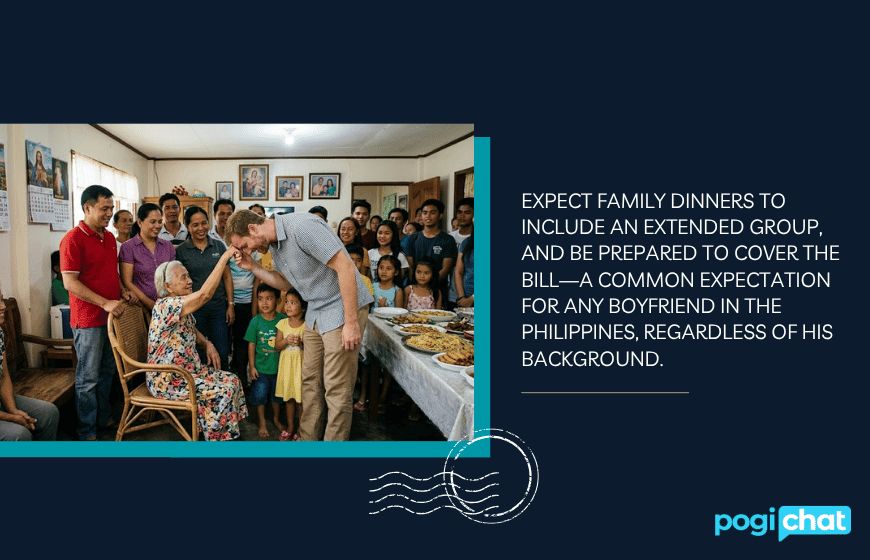
If you’re invited to a restaurant dinner, don’t assume it will only be her parents.
Filipino families are often close-knit, and family gatherings can include:
- Parents
- Grandparents
- Aunts and uncles
- Cousins
- Family friends
What sounds like dinner with the parents can easily turn into a gathering of a dozen people or more.
And yes, if you’re the boyfriend, there’s a good chance you’ll be expected to pay for the meal. This isn’t because you’re a foreigner. It’s a common expectation for boyfriends in the Philippines regardless of nationality.
Should You Bring a Gift?
Absolutely.
Filipinos appreciate thoughtful gestures, especially when meeting family members for the first time.
A common tradition is bringing pasalubong, which refers to gifts or souvenirs.
Good gift ideas include:
- Chocolates
- Snacks from your home country
- Soaps and lotions
- Clothing items
- Sports jerseys
- Wine or champagne
- A case of beer
If you’re visiting the family home, even something simple can be appreciated.
The goal isn’t to impress people with money. It’s to show thoughtfulness and respect.

Chat with strangers
from around the world
Random, anonymous, and instant — no sign-up required. Just click and start talking.
Filipino House Etiquette
When arriving at a Filipino home, pay attention to local customs.
Remove Your Shoes
Many Filipino households ask guests to remove their shoes before entering.
If you see shoes outside the door, take that as your cue.
Learn “Mano Po”
One traditional Filipino gesture of respect is called mano po.
This involves taking an elder’s hand and gently touching it to your forehead.
It’s a sign of respect often shown to:
- Parents
- Grandparents
- Older relatives
While not every family expects foreign guests to do this, understanding the tradition is always appreciated.
How to Address Family Members
Avoid calling parents by their first names unless they specifically ask you to.
Common Filipino family titles include:
- Tatay – Father
- Nanay – Mother
- Lolo – Grandfather
- Lola – Grandmother
- Tito – Uncle
- Tita – Aunt
Using these titles shows respect and cultural awareness.
Keep Public Displays of Affection to a Minimum
Filipino families tend to be more conservative than many Western families.
Holding hands is usually fine.
However, excessive public displays of affection can make relatives uncomfortable.
When meeting the family for the first time, it’s best to:
- Avoid kissing in front of relatives
- Keep physical affection minimal
- Focus on interacting with the family
Get Ready for Personal Questions
One thing that surprises many foreigners is how direct Filipino families can be.

You may be asked questions about:
- Your job
- Your age
- Previous marriages
- Children
- How long you’re staying in the Philippines
- Your future plans
- Your intentions with their daughter
In many Western countries, these questions might seem overly personal.
In the Philippines, they’re usually asked out of genuine curiosity and concern.
Answer honestly and respectfully.
Topics to Avoid
While conversation is encouraged, some topics are best handled carefully.
Try to avoid:
- Bragging about money
- Showing off your income
- Heated political discussions
- Complex geopolitical debates
- Excessive sarcasm
Instead, focus on sharing who you are, what you do, and why you care about their daughter.
What Filipino Family Dinners Are Like
If you’re invited to a home-cooked meal, expect a warm and generous experience.
You may notice a few differences from Western dining customs.
Don’t Expect a Knife
In many Filipino homes, meals are eaten with a spoon and fork.
Knives are rarely placed at individual settings.
Family-Style Dining
Food is typically served family-style, with everyone sharing dishes placed in the center of the table.
Try Everything
It’s considered polite to sample everything offered, even if it’s something you’ve never seen before.
You don’t have to finish every dish, but taking a small taste shows appreciation.
Useful Filipino Phrases to Learn
Knowing a few Filipino words can earn you instant points with the family.
Masarap
Masarap means “delicious.”
Use it when complimenting the food.
Busog Na Ako
Busog na ako means “I’m full.”
It’s a polite way to decline additional servings.
Even a few simple phrases show respect for Filipino culture and make a positive impression.
READ MORE: How to Chat with Strangers in the Philippines Using Simple Tagalog
Drinking With the Family
After dinner, many Filipino gatherings continue with drinks, conversation, and sometimes karaoke.
If her father offers you a drink, accepting can be seen as a sign of friendship and bonding.
However, know your limits.
A good impression can disappear quickly if you become overly intoxicated.
Moderation is always the safer choice.
Expect Karaoke
No guide to Filipino family gatherings would be complete without mentioning karaoke.
There’s a good chance someone will bring out a microphone.
You don’t have to be a great singer.
In fact, enthusiasm often matters more than talent.
Making an effort usually earns more respect than refusing to participate.
Leaving the Gathering
When it’s time to leave:
- Thank everyone for their hospitality.
- Shake hands when saying goodbye.
- Let your girlfriend help with any cultural nuances.
Don’t be surprised if you’re sent home with leftover food.
Accepting it is generally considered polite and a sign that the family enjoyed having you there.
What Meeting the Parents Really Means
This is the most important thing to understand.
For many Filipinas, introducing you to the family is a meaningful step in the relationship.
It signals trust, seriousness, and a desire for the relationship to become more integrated into family life.
After meeting the parents, you’ll likely be invited to future:
- Birthdays
- Weddings
- Graduations
- Baptisms
- Holiday celebrations
- Family reunions
In other words, you’re no longer just dating her. You’re becoming part of the broader family circle.
Meeting your Filipina’s parents can feel intimidating, but it doesn’t have to be.
Show respect, be genuine, embrace Filipino culture, and remember that the family simply wants to know the person dating their daughter.
A thoughtful gift, good manners, a willingness to answer questions, and an appreciation for family values will go a long way.
Most importantly, understand that meeting the parents is rarely just dinner. In Filipino culture, it’s often a sign that the relationship is moving into a more serious stage.
FAQ
Why do Filipinas introduce their partners to their parents so early?
In Filipino culture, family is highly integrated into daily life. An early introduction signifies that the relationship is being taken seriously and built on trust, rather than indicating an immediate wedding.
What is a appropriate gift to bring when meeting a Filipina’s parents?
Bringing a small gift, known as pasalubong, is highly appreciated. Great options include chocolates, snacks from your home country, soaps, lotions, wine, or a case of beer.
What is the “Mano Po” gesture and should I do it?
Mano po is a traditional gesture of respect where you take an elder’s hand and gently touch it to your forehead. While not always expected of foreigners, showing awareness of this custom is deeply appreciated.
How should I address my Filipina girlfriend’s parents and relatives?
Avoid using first names. Use respectful Filipino titles such as Tatay for father, Nanay for mother, Tito for uncle, Tita for aunt, Lolo for grandfather, and Lola for grandmother.
Why do Filipino parents ask such personal questions about money and jobs?
Direct questions regarding your age, occupation, income, and past marriages stem from genuine curiosity and protective concern for their daughter’s future, rather than intentional rudeness.
Is the boyfriend expected to pay for the dinner when meeting the family?
Yes, if you are dining at a restaurant, there is a strong cultural expectation for the boyfriend to pay for the meal, regardless of your nationality.