
 By Keven Galolo

You wake up next to the same person every morning. Maybe you text them goodnight, share meals, or scroll through shows together on mute. But if you’re honest, you haven’t thought about “forever” in ages. You haven’t thought about leaving, either.
It’s not just you.
All over the internet, people tell stories about drifting along—at work, in relationships, or through daily routines. They’re not driven by passion or even explicit contentment. They just… keep going.
Is it laziness?
Not exactly. More often, it’s comfort. Or habit. Or a quiet fear of shaking things up.
We tell ourselves, “I’ll figure it out later.” Weeks turn into months. Sometimes, years.
But why do so many of us stick around with no real plan?
When “No Intention” Becomes a Hidden Habit
Ask someone why they haven’t left a relationship (or a job, or a city), and you might hear:
“I have no intention of leaving.”
“I have no intention of dating anyone else.”
“I’m just here, for now.”
On the surface, these sound passive—like we’re just letting life happen. But dig a little deeper, and you’ll find that “no intention” is often an active choice. It’s a decision to avoid discomfort and keep things familiar.
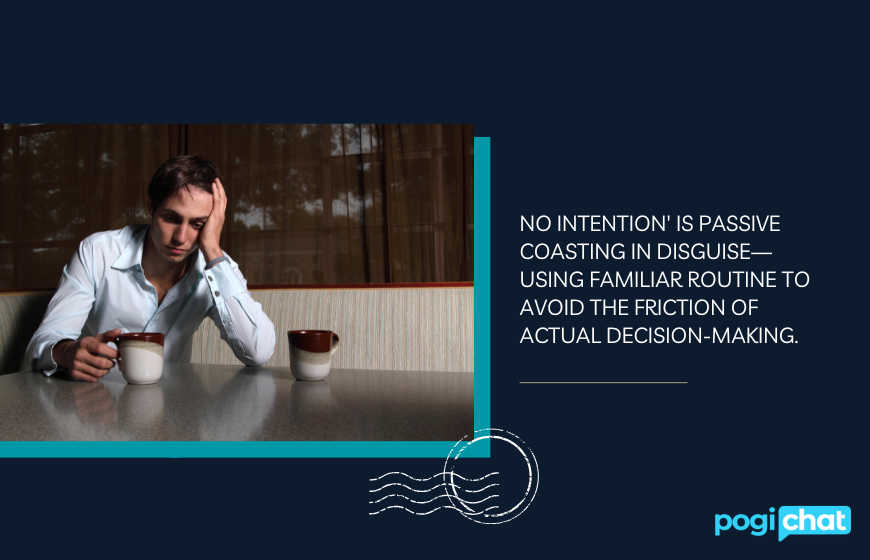
Our brains are wired for routine.
Familiar patterns feel safe. They demand less mental energy than change. Even when things aren’t great, staying put means not having to face the unknown.
Think about it:
How often do you catch yourself on autopilot, letting days blur together because it’s easier?
How often do you mistake “just getting by” for making real decisions?
Pay attention to your habits. Are you coasting, or are you choosing? The difference is subtle, but it matters.
The Silent Power of Avoiding Change
What’s really holding us in place?
Most of the time, it’s not love. It’s not joy. It’s fear.
Fear of the unknown.
What if I leave and regret it?
What if I try to love—and fail?
What if I end up alone?
These silent questions echo in the background. Many people, sharing anonymously online, admit they stay in relationships (or jobs, or cities) not because it’s what they want—but because it’s what they know.
There’s another layer, too: the fear of hurting someone else.
Nobody wants to be the “bad guy.”
So we linger, hoping things will magically resolve themselves.
But fear is a lousy reason to stay.
Recognize that fear is normal. But don’t let it be your default setting. The best decisions rarely come from avoidance.

Chat with strangers
from around the world
Random, anonymous, and instant — no sign-up required. Just click and start talking.
Is It Really Comfort, or Just Avoiding Discomfort?
There’s a difference between being happy where you are and just not wanting to face what’s next.
Scroll through any comment section on relationship advice threads, and you’ll see it:
“It’s fine for now.”
“I’m not unhappy, but I’m not thrilled, either.”
“We get along.”
These aren’t endorsements. They’re rationalizations.
If you find yourself constantly justifying why you’re staying—“It could be worse,” “At least we’re not fighting”—ask yourself:
Are you actually content? Or are you just dodging a harder conversation?
Comfort is real, but so is inertia. Sometimes, what feels like comfort is just the absence of discomfort.
Ask yourself if you’re truly at ease, or just avoiding the discomfort of change. It’s a hard question, but an important one.
When Not Loving, Dating, or Marrying Still Feels ‘Easier’
Staying in a relationship without loving, dating, or wanting to marry someone can be less painful than starting over.
It’s easier to keep the status quo than to face an awkward talk—or a lonely Saturday night.
But here’s where it gets tricky:
Society loves a happy ending. Families, friends, even social media all have opinions about what you “should” do. Sometimes it feels simpler to stay and play along, even when your heart isn’t in it.
But you deserve more than just “easier.”
Admitting to yourself that your intentions have changed is hard. Saying it out loud is harder. But it’s also the bravest thing you can do.
Takeaway:
It’s okay to want something different. It’s okay to let go when your heart isn’t in it anymore.
What You Can Do If You’re Stuck in the “No Intention” Zone
So, what now?
If you realize you’re in a holding pattern, here’s how to start moving forward—without blowing up your life overnight.
1. Notice your patterns.
Are you making choices, or just letting things happen? Awareness is the first step.
2. Talk it out.
A trusted friend, partner, or even a journal can help you sort through the fog. Sometimes, saying your uncertainty out loud makes it less scary.
3. Take small steps.
You don’t need to leap into the unknown. Try a new hobby. Have a real conversation. Set one small goal. Movement creates momentum.
Remember:
You’re not alone. Most people, at some point, drift through a “no intention” phase. What matters is what you do once you notice it.
RECOMMENDED READING:
Toxic Relationship Signs: What Psychology Says It Looks Like
Average Relationship Length: How Long Do Most Couples Last?
Why Does Intimacy Feel Forced? Real Reasons We Struggle to Connect
Your Life, Your Choice
We all get stuck sometimes.
We all coast.
But you don’t have to stay in limbo forever.
When you catch yourself living on autopilot—whether in love, work, or daily routine—pause and ask:
Is this what I want? Or is this just what I know?
Either answer is valid.
But when you choose instead of drifting, you take back your agency.
It’s your life. You get to decide if you stay, go, or finally do something bold.
And that—no matter what you choose—is worth sticking around for.
FAQ: Staying (or Not) in Relationships
Why do people stay in relationships they aren’t excited about?
Often, it’s about comfort, habit, or fear of change. The familiar feels safer than the uncertainty of making a big move.
Is it wrong to stay just because it’s easier?
Not necessarily. But it’s important to recognize if you’re choosing comfort or simply avoiding discomfort. Honesty with yourself matters most.
How do I know if I’m actually happy, or just coasting?
Ask yourself: Do I look forward to spending time with my partner, or am I just avoiding conflict? Genuine happiness feels energizing, not draining.
What’s a practical first step if I feel stuck?
Start by noticing your patterns and talk about your feelings—either with someone you trust or by journaling. Small actions can lead to bigger clarity.
Is it normal to fear change, even if I want something different?
Absolutely. Fear is a natural part of any transition. The key is not letting it guide your decisions.